If you’ve ever wondered what solitaire really is, how it’s played, or why this classic game still captivates millions, this guide breaks it all down in a fresh, simple, and genuinely fun way.
Introduction: Why Solitaire Still Matters
Let’s be honest—most of us have stumbled upon solitaire at some point in our lives. Maybe on an old computer, maybe on a phone during a long trip, or maybe while trying to relax after a busy day. But despite how familiar it feels, many people still don’t know its true origins, its deeper logic, or why it remains such an addictive brain exercise even in the age of flashy online games.
In this guide, I’ll walk you through everything you need to know—what solitaire really is, how to play solitaire step by step, how different versions work, and why online solitaire has become a modern comfort game for people of all ages. I’ll mix a bit of history, a bit of strategy, and a lot of my own observations, because honestly, solitaire is one of those games that grows on you the more you understand it.
What Is Solitaire?
At its core, solitaire is a single–player card game built around strategy, patience, and a little bit of luck. You play against the layout, not an opponent, which makes it strangely satisfying—almost meditative at times. The most well-known version is Klondike, often simply called classic solitaire. It’s the same version you probably remember from early computer systems.
Bence solitaire’s charm lies in its simplicity. You don’t need fancy equipment—just a deck of cards or access to free solitaire on any device. And because it’s not fast-paced, it gives your mind room to breathe while still keeping your brain gently engaged. Particularly on a stressful day, it’s like a small mental reset button.
The Basic Objective of Classic Solitaire
The main goal is simple: organize all 52 cards into four foundation piles by suit—in ascending order from Ace to King. But getting there is where the game becomes interesting. You must uncover hidden cards, build sequences, and make smart decisions that open future moves.
Some people think solitaire is mostly luck, but from what I’ve seen, the more you play, the more you understand its flow and patterns. Good decisions really matter: when to move a card, when to wait, and when to deliberately avoid an obvious move. That’s the beauty of it.
How the Solitaire Layout Works
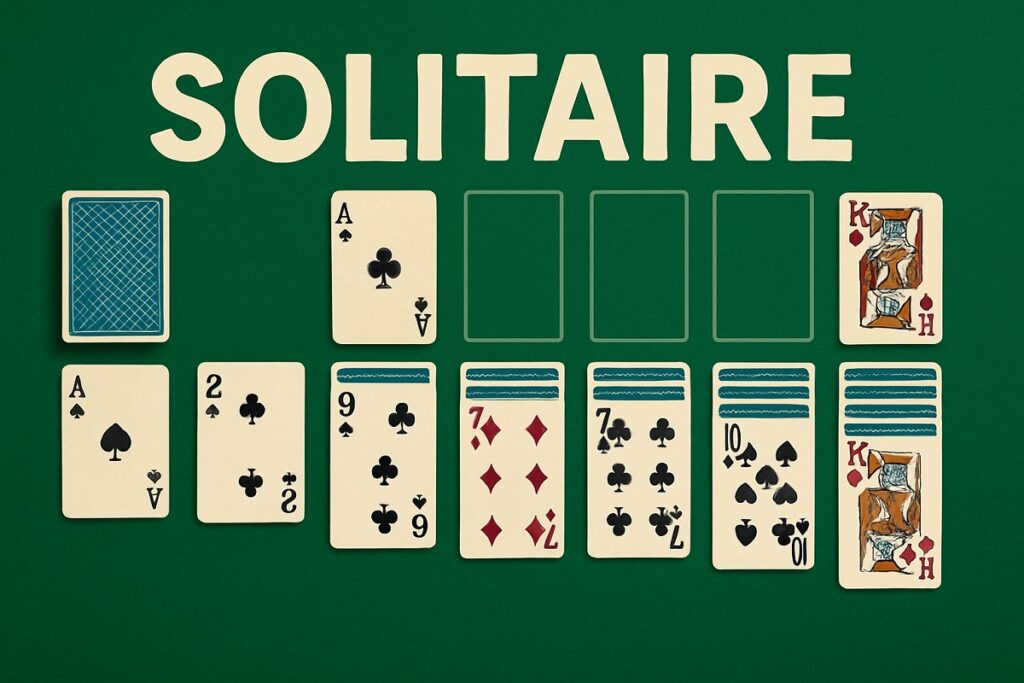
Before diving into gameplay, let’s break down the seven main areas you’ll see when you play solitaire:
1. The Tableau
This is the set of seven piles you build on during the game. Cards are arranged like this:
- First pile: 1 card
- Second pile: 2 cards
- Third pile: 3 cards
- …and so on up to 7 cards
The top card in each pile is face-up. Everything else is face-down until uncovered.
2. The Foundation
These are the four empty slots at the top where you’ll eventually stack each suit from Ace to King. When all foundation piles are complete, you win.
3. The Stock
This is the pile of undealt cards. You draw from it to access new cards.
4. The Waste
Cards you draw from the stock but can’t immediately use go here, face-up.
The Overall Flow
The entire game is about moving cards between these areas in a way that reveals hidden cards, builds useful sequences, and eventually fills the foundation. Sounds easy—but there’s a surprising amount of strategy involved.
How to Play Solitaire: Step-by-Step Guide
Now let’s break down how to play solitaire in a simple, friendly, and practical way.
Step 1: Understand Color Alternation
You can only place a card onto a card of the opposite color and exactly one rank higher. For example:
- You can place a black 6 on a red 7
- You can place a red Queen on a black King
This rule builds the descending piles in the tableau.
Step 2: Reveal Hidden Cards
Every time you move a face-up card off a tableau pile, the card beneath it flips face-up. This is one of the most satisfying parts of the game, and it’s your main way to gain access to new cards.
Step 3: Opening Empty Columns
If you clear an entire tableau pile, you can only place a King (or a sequence starting with a King) in that empty space. Kings are powerful in solitaire because they unlock entire new build paths.
Step 4: Move Aces to the Foundation ASAP
Aces serve no purpose in the tableau, so once you spot them, move them to the foundation immediately. After that, build foundation piles upward.
Step 5: Cycling Through the Stock
When you don’t see useful moves in the tableau, it’s time to draw cards from the stock. Depending on the rules, you may draw:
- One card at a time
- Three cards at a time
Personally, I prefer the single-card draw because it feels fairer and gives you more control, but both versions are fun.
Common Solitaire Mistakes and How to Avoid Them
I’ve seen beginners do a few things that make the game way harder than it needs to be. If you avoid these small traps, you’ll win much more often.
1. Moving Cards Too Quickly
Solitaire rewards patience. Just because you can move a card doesn’t always mean you should. A move that looks harmless can end up blocking a more important card later.
2. Ignoring Hidden Cards
Always prioritize uncovering face-down cards in the tableau. They open the game more than anything else.
3. Filling Empty Columns Without a King
This is a classic beginner mistake. Only Kings or King-starting stacks can legally occupy empty spaces, so don’t empty a column unless you know you have a King ready.
4. Forgetting About the Waste Pile
Sometimes players forget to check the waste pile before making a move in the tableau. That waste card might complete a sequence perfectly.
The Benefits of Playing Solitaire
Even though solitaire is such a simple game on the surface, it offers a surprising number of benefits—far more than people expect.
It Helps Build Focus
You can’t rush solitaire. You stay present, think ahead, and look for patterns. It’s almost like a lightweight version of meditation.
It Reduces Stress
I’ve personally played solitaire during overwhelming days just to reset my mind. Something about its calm rhythm helps you breathe better.
It Sharpens Problem-Solving Skills
You analyze possibilities, consider consequences, and make thoughtful decisions. Over time, you really do get sharper.
It’s Perfect for Quick Breaks
Whether you’re waiting at the airport or taking a break at work, one round of solitaire gives your brain a small but refreshing workout.
Why Online Solitaire Became So Popular
Even though solitaire began centuries ago, digital life has given it a new home. And honestly, it fits perfectly there.
Instant Access Anytime
You can play online solitaire from your phone, tablet, or laptop in seconds—no physical cards needed.
No Setup, No Cleanup
Classic card games are great, but shuffling, laying out cards, and cleaning up take time. Online versions skip all that.
Free Solitaire Everywhere
It’s incredibly easy to find free solitaire websites, so anyone can play without signing up or downloading anything.
More Variants, More Fun
Digital solitaire isn’t limited to Klondike. You’ll find:
- Spider Solitaire
- Pyramid Solitaire
- TriPeaks
- FreeCell
Her biri farklı bir tat veriyor. Bazen beyin yakan, bazen tamamen sakinleştiren.
Popular Solitaire Variants Explained
Let me walk you through the most common versions you’ll see online today.
1. Spider Solitaire
This one uses two decks. The goal is to build descending sequences all the way from King to Ace. It’s tougher than classic solitaire, but deeply satisfying once you get the hang of it.
2. FreeCell
Unlike most solitaire games, FreeCell gives you access to every card from the start. Strategy matters far more than luck here. If you enjoy logical games, this one will hook you.
3. Pyramid Solitaire
In this version, you match pairs of cards that add up to 13. It’s quick, fun, and feels almost like a small puzzle each time.
4. TriPeaks Solitaire
You clear cards by selecting ones that are one rank higher or lower than the current card. It moves fast and feels more dynamic than classic solitaire.
Tips to Improve Your Solitaire Skills
If you’re just getting started, here are a few small yet powerful tips that can dramatically improve your win rate.
Always Uncover Tableau Cards First
It’s tempting to move foundation cards early, but clearing hidden cards should almost always be your priority.
Keep an Eye on Color Distribution
If you stack too many cards of one color in one column, you may limit your movement options later.
Don’t Rush Through the Stock
Move slowly. One overlooked card can block your whole path.
Use Empty Columns Strategically
These columns are like “free space” in the game—super useful when used wisely.
Practice Makes Patterns Visible
The more you play, the more you’ll see recurring situations. You’ll eventually start predicting chains of moves.
The Emotional Side of Solitaire
Here’s something I don’t see mentioned often: solitaire actually carries a small emotional journey within each game. There’s suspense, surprise, satisfaction, and sometimes mild frustration. When you flip a card you needed, or complete a foundation pile, it’s genuinely rewarding. Solitaire is not competitive—it’s personal. And that makes the victory feel a bit sweeter.
Is Solitaire a Game of Skill or Luck?
People argue about this all the time. My honest opinion? It’s both.
Luck determines the initial layout. Skill determines what you do with it. Even a bad start can turn into a win when you think ahead, stay patient, and make smart choices.
Who Can Play Solitaire?
Everyone. It has no age barrier, no experience requirement, and no need for special knowledge. Whether you’re introducing a child to card games or you’re retired and want a calm mental workout, solitaire adapts effortlessly.
Why Solitaire Feels So Universal
Solitaire is one of those rare games that follows you through life without demanding anything. It’s there when you’re bored, stressed, curious, distracted, or just wanting a moment of quiet. That kind of timeless companionship is why it’s still around centuries later.
Final Thoughts
Solitaire is more than “just a card game.” It’s a blend of strategy, luck, calm focus, and personal satisfaction. Whether you prefer classic solitaire, fast-paced variants, or simple online solitaire on a break, there’s always something comforting about it.
And if you’d like a clean, smooth, ad-free place to play solitaire, I genuinely recommend trying: solosolitaire.com
Give it a try, see which version becomes your favorite, and if this guide helped you understand solitaire better, feel free to share it or drop a comment somewhere. Good luck—and may your Aces appear early!